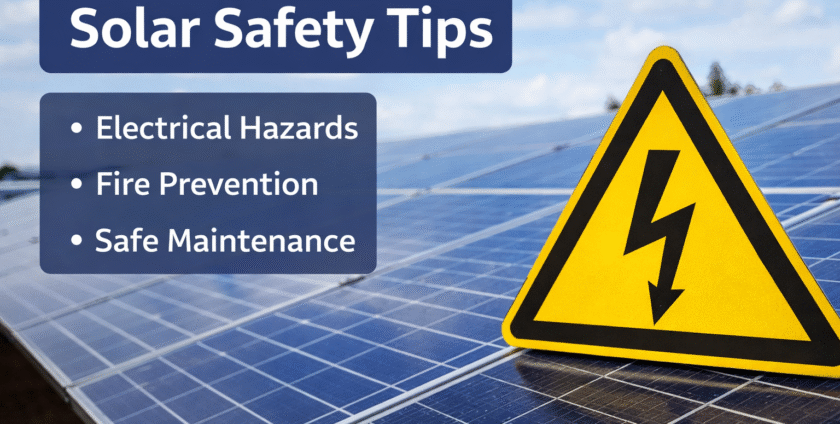
Solar Safety Tips—Complete Guide for Safe Solar Installation & Use
Solar energy is a smart and cost‑effective solution for homes, businesses, and industries. However, to get maximum performance and avoid accidents, it is very important to follow proper solar safety tips. Whether you are planning a new solar installation or already using a solar system, safety should always come first.
This blog covers essential solar safety tips to protect people, equipment, and property.
Why Solar Safety Is Important
Solar systems involve electricity, height work, heavy equipment, and high DC voltage. Poor installation or careless handling can lead to:
- Electrical shocks
- Fire hazards
- Equipment damage
- System failure
Following proper solar safety tips ensures long-term system performance, reliability, and peace of mind.
Solar Safety Tips Before Installation
1. Choose a professional solar company. Always hire a certified and experienced solar company for installation. Professional installers follow safety standards and use proper tools.
2. Site Inspection Is Mandatory
Before installation, a complete site survey should be done to check:
- Roof strength
- Shading issues
- Wiring routes
- Load requirements
3. Use Certified Solar Equipment
Only use:
- Tier‑1 solar panels
- Certified inverters
- Quality DC & AC protection devices
Low‑quality equipment increases safety risks.
Solar Safety Tips During Installation
4. Follow Electrical Safety Standards
- Always switch off the main power supply
- Use insulated tools
- Avoid working on live circuits
5. Proper Earthing & Surge Protection
Good earthing protects the system from:
- Electric shocks
- Lightning damage
- Voltage surges
Every solar system must have proper grounding.
6. Safe Working at Height
- Use safety belts and helmets
- Avoid installation during rain or strong winds
- Secure ladders and scaffolding
Solar Safety Tips After Installation
7. Regular System Inspection
Inspect your solar system every 3–6 months for:
- Loose connections
- Damaged cables
- Inverter error messages
8. Keep Panels Clean Safely
- Clean panels early morning or evening
- Use soft brushes and clean water
- Never use harsh chemicals
Dirty panels reduce efficiency and can overheat.
9. Protect the Inverter Area
- Keep the inverter dry and ventilated
- Do not block airflow
- Keep children away from electrical components
Fire Safety Tips for Solar Systems
10. Install DC & AC Isolators
Isolators help disconnect power during emergencies and maintenance.
11. Use Proper Cable Management
- Avoid loose or hanging cables
- Protect wires from heat and water
- Use conduit pipes where required
Battery Safety Tips (If Applicable)
12. Proper Battery Placement
- Install batteries in a cool, ventilated area
- Avoid direct sunlight
- Keep away from flammable materials
13. Avoid Overcharging & Deep Discharge
Use smart inverters and charge controllers to protect batteries and increase lifespan.
Solar Safety Tips for Homeowners
- Never try to repair the system yourself
- Contact professionals for faults or upgrades
- Keep emergency contact numbers available
Conclusion
Following these solar safety tips helps ensure safe operation, longer system life, and maximum energy production. Solar energy is a powerful investment, and safety is the key to protecting that investment.
If you are planning a solar system or need professional inspection and maintenance, always consult a trusted solar expert.
Frequently Asked Questions (FAQ) – Solar Safety Tips
1. Is solar system installation safe?
Yes, solar systems are safe if they are installed by trained professionals and proper safety standards are followed during installation and operation.
2. Can solar panels be damaged by rain or lightning?
Solar panels are weather-resistant, but proper earthing and lightning protection are very important to protect the system from electrical damage.
3. Why is earthing important for a solar system?
Earthing protects the system from electric shock, equipment damage, and fire risks. Without proper grounding, a solar system can become unsafe.
4. Can a solar inverter overheat?
Yes, overheating can occur if the inverter is installed in a closed or poorly ventilated area. Inverters should always be installed in a cool, dry, and well-ventilated place.
5. How important is maintenance for solar system safety?
Regular maintenance is essential for safety and performance. This includes panel cleaning, wiring inspection, and inverter health checks.
6. Is it safe to check solar wiring by yourself?
No. Checking or repairing solar wiring without technical knowledge can be dangerous. Always contact a qualified solar technician.
7. Is a solar system safe for children and animals?
Yes, if exposed wires are properly covered, the inverter is placed in a secure area, and safety measures are followed.
8. Can low-quality solar equipment cause fire hazards?
Yes. Poor-quality cables, breakers, and inverters increase the risk of overheating and fire. Certified and branded equipment should always be used.
9. Is a safety inspection required after solar installation?
Yes. A final safety inspection ensures correct wiring, proper earthing, and safe system operation.
10. Who should install a solar system for maximum safety?
Always choose an experienced and professional solar company that follows electrical safety standards and provides after-sales support. IMH Technologies offers safe and reliable solar solutions.
- By: IMH Technologies
- 0 comment

Leave a Reply