Solar System and Planets—Complete Guide by IMH Technologies
Learn about the solar system and planets, their features, and the connection between solar energy and modern technology with IMH Technologies.
The solar system and planets have fascinated humans for centuries. From early sky watchers to modern scientists, understanding our cosmic neighborhood has helped us learn about Earth, energy, technology, and the future of humanity. At IMH Technologies, we believe that knowledge of the solar system connects directly with today’s innovations, such as solar energy, satellite communication, and advanced engineering.
What Is the Solar System?
The solar system is a family of celestial bodies bound together by the gravity of the Sun. It consists of:
-
The Sun
-
Eight major planets
-
Dwarf planets
-
Moons
-
Asteroids and comets
-
Meteoroids and interplanetary dust
The Sun holds 99.8% of the total mass of the solar system and provides light and energy to all planets.
Names of Planets in the Solar System
The eight planets are divided into two main categories:
1. Inner Planets (Terrestrial Planets)
Mercury—the smallest and closest planet to the Sun. It has extreme temperatures and no atmosphere.
Venus—Known as Earth’s twin because of similar size, but it has a very hot and toxic atmosphere.
Earth—the only planet known to support life, rich in water and oxygen.
Mars—Called the Red Planet; scientists are exploring it for future human missions.
2. Outer Planets (Gas Giants and Ice Giants)
Jupiter—The largest planet with a massive storm called the Great Red Spot.
Saturn—Famous for its beautiful rings made of ice and rock.
Uranus—An ice giant that rotates on its side.
Neptune—The farthest planet with very strong winds and a deep blue color.
Why Understanding the Solar System Matters
Studying the solar system is not only about space curiosity. It directly impacts:
-
Solar energy technology
-
Satellite internet and GPS
-
Climate understanding
-
Space exploration opportunities
-
Scientific innovation
At IMH Technologies, our work with solar solutions is inspired by the same source that powers the planets—the Sun.
Solar Energy and the Solar System Connection
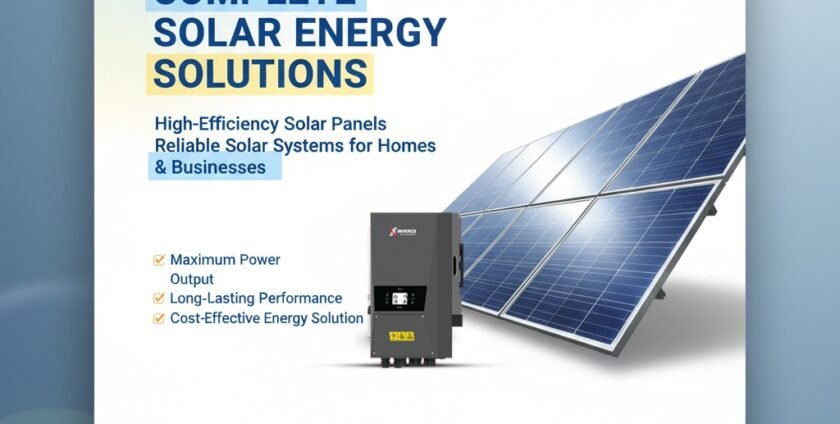
The Sun is the heart of the solar system and also the biggest renewable energy source for Earth. Modern solar systems convert sunlight into electricity using:
-
Solar panels
-
Inverters
-
Batteries
-
Smart energy management systems
IMH Technologies provides advanced solar solutions to help homes and businesses benefit from this natural power, just like planets depend on the Sun.
Interesting Facts About the Solar System
-
Light from the Sun takes about 8 minutes to reach Earth
-
Jupiter can fit more than 1,300 Earths inside it
-
A year on Mercury is only 88 days
-
Neptune’s winds are the fastest in the solar system
-
Mars has the tallest volcano in the system
Future of Space and Technology
Human missions to Mars, asteroid mining, and space tourism are becoming reality. Understanding planets helps engineers design better:
-
Solar power systems
-
Communication satellites
-
Weather prediction tools
-
Navigation technology
IMH Technologies aims to be part of this technological future by delivering smart energy and digital innovation.
Conclusion
The solar system and planets are not just science topics—they are the foundation of modern technology and renewable energy. Learning about them increases awareness of how important the Sun is for life and progress.
If you want to adopt solar technology inspired by the power of the Sun, IMH Technologies is here to guide you.
Contact IMH Technologies
Call: 041-2553635
WhatsApp: 0334-2555630
Location: Faisalabad
Frequently Asked Questions (FAQ) – Solar System and Planets
1. How many planets are in the solar system?
There are eight official planets in our solar system: Mercury, Venus, Earth, Mars, Jupiter, Saturn, Uranus, and Neptune. Pluto is now classified as a dwarf planet.
2. Which is the largest planet in the solar system?
Jupiter is the largest planet. It is so big that more than 1,300 Earths could fit inside it.
3. Which planet is closest to the Sun?
Mercury is the closest planet to the Sun and also the smallest planet in the solar system.
4. Why is Earth the only planet with life?
Earth has the right conditions for life: liquid water, oxygen, a suitable temperature, and a protective atmosphere.
5. What is the difference between inner and outer planets?
Inner planets are rocky and smaller (Mercury, Venus, Earth, and Mars). Outer planets are gas or ice giants (Jupiter, Saturn, Uranus, and Neptune).
6. How does the Sun produce energy?
The Sun produces energy through nuclear fusion, which releases massive heat and light that power the entire solar system.
7. What is a solar system in simple words?
The solar system is a group of planets, moons, and other objects that move around the Sun due to gravity.
8. How is the solar system related to solar energy?
Solar energy on Earth comes directly from the Sun—the same star that controls the movement of all planets. Solar panels convert this sunlight into electricity.
9. Which planet is known as the Red Planet?
Mars is called the Red Planet because of its reddish soil rich in iron oxide.
10. Can humans live on other planets?
Currently, no other planet supports human life, but scientists are researching Mars for future possibilities.
- By: IMH Technologies
- Tags: #solar energy, IMH Technologies, planets, planets information, Renewable Energy Pakistan, solar system, solar system guide, sun and planets
- 0 comment

Leave a Reply